The time of AI (AI) as well as machine learning has come to an end. With it comes the possibility of revolutionising healthcare. According to some estimates, AI within healthcare could grow into a $188 billion business in 2030. What would that be like? What are the ways AI can be utilised in the context of medical care? What can you anticipate from AI in relation to your own health care?
Already, healthcare professionals, doctors, surgeons, and researchers are utilising AI to come up with new medicines and treatments, identify difficult conditions faster, and enhance access of patients to medical care, and this is just the beginning.
Our experts discuss how AI is being utilised in the healthcare system right now and the future we could expect to see down the road as innovation and testing continue.
Table of Contents
What are the advantages of the use of AI in hospitals and healthcare?
Artificial intelligence is the term used to describe the computer’s ability to perform specific tasks that used to require human intelligence. Examples include understanding speech, making choices, and translating between various languages.
Machine learning is one of the branches of AI that focuses specifically on programming computers. It makes use of huge datasets and algorithms to discover how to perform complicated tasks and tackle problems in the same way that human beings do.
When utilised together, AI and machine learning can make us more efficient and productive than before. These tools are currently being utilised with thousands of data sets for improving our capacity to investigate different diseases and treatments. These tools are also utilised behind the scenes, before patients visit the clinic for treatment, to enhance the experience of patients.
From neurology to radiology, emergency response services, administration services, and more, AI is changing the methods we look after ourselves and one another. In many ways, these advances force us to face many of the same questions: How can we keep pushing ourselves to become better at what we’re already doing well? What’s the next step when we take on new technologies?
“AI is no longer just an interesting idea, but it’s being used in a real-life setting,” claims the Cleveland Clinic’s chief digital officer, Rohit Chandra, PhD. Today, it’s possible to have a high chance that computers can detect an MRI or X-ray better than a human being, which means it’s quite advanced in these cases. However, at the other end of the spectrum, there’s generative artificial intelligence, such as ChatGPT and all the other amazing stuff that you read about in the media. It’s a fascinating technology; however, it’s not as advanced. The potential for it is real, and it’s incredibly promising.”
To achieve this, Cleveland Clinic has become an early participant in the global effort to build the AI Alliance -an international network comprised of developers, researchers, and leaders from the organisational world working to develop and promote the responsible and safe usage of AI. The AI Alliance began in the year 2000 with IBM and Meta and has grown to include more than 90 top AI research and technology companies to help accelerate and promote an open, secure, and trustworthy innovative AI technology research and development. Cleveland Clinic will lead the initiative to speed up and improve its ethical usage of AI in medical research and in patient care.
One illustration of the Cleveland Clinic’s dedication to AI advancement is the Discovery Accelerator, a 10-year strategic partnership between IBM and the Cleveland Clinic, focused on increasing the speed of biomedical discovery.
“Biomedical research is changing from a discipline that was once exclusively reliant on experiments in a lab done on a bench with animal models or biological samples to a discipline that involves heavy and fast computational tools,” Says the Accelerator’s executive leader, as well as the Cleveland Clinic’s chief Information Officer.
“That shift has happened because the data we now have at our disposal is way more than what we had even just 10 years ago,” she adds. “We can now determine the exact genetic makeup of every cell in the body of a human. We can determine in depth the way that this genetic composition is transferring itself to the proteins that our bodies are producing and how those proteins influence the functions of various organs within the body.”
AI Machine learning and AI are incorporated in every aspect of the patient’s care processfrom research to diagnosis, treatment, and then aftercare. This means that the healthcare field is always evolving. These changes will require the development of new methods for medical research as well as new skills for surgeons, doctors, and nurses looking to work in medical fields.
What is the speed at which this technology is evolving? If we take our understanding of the way that our bodies functioned in the past 10 years and compare that to our knowledge of how it functions in the present, using our latest AI measurement tools, suggests that we’d get a totally different view of how the human body functions.
“The advances in AI would be like taking a fuzzy black and white picture from the 1800s and comparing it to one from an iPhone 14 Pro with high definition and colour,” she describes. “This is the difference with the scale and the resolution of the data that we have to work with now.”
What exactly does AI or machine learning look like in the real world? Based on the focus area or medical specialisation and what’s required, AI can be used in various ways to improve outcomes for patients.
Diagnostics
Broken bones and breast cancer bleeding, and many more, however complex they may be, require the proper set of equipment to arrive at an accurate diagnosis. The patient’s treatment depends on getting the correct diagnosis.
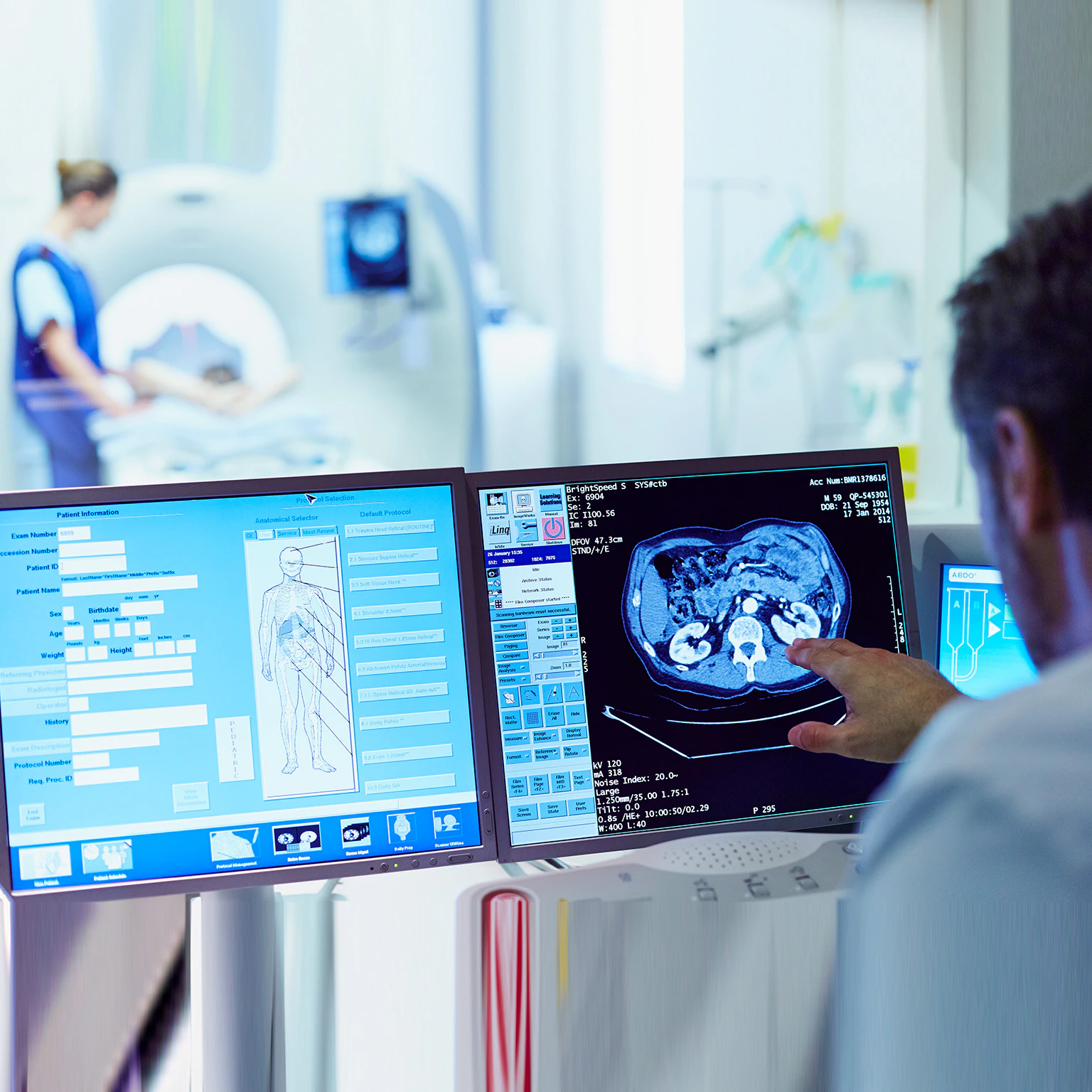
“In radiology, technology and computers are used every day by doctors to identify diseases before anyone else,” says diagnostic radiologist Po-Hao Chen, MD. “In many cases, a radiologist is the first one to call the disease when it happens.”
How can AI integrate into the diagnostics process? Let’s reexamine the definition of machine learning.
Let’s suppose you present a computer program with the sequence of X-rays that could or might not reveal bone fractures. After examining the images, the program attempts to determine which contain bone fractures. If it has wrong answers, then you provide it with the right answers. Then you feed it a new sequence of X-rays. You then let it run the program over again using the new information. As time passes, the program becomes better at determining whether it’s osteoporosis or not. Each time this occurs, it’s able to make decisions faster, more efficiently, and more efficiently.
Imagine that exact procedure, but using several hundred or a thousand additional data sources and various situations. You can likely imagine how AI can aid in pinpointing and pinpointing results with the assistance of a radiologist’s knowledge.
“It works like a second pair of eyes, like a shoulder-to-shoulder partner,” says. “The combined team of human plus AI is when you get the best performance.”
The radiologists of the next generation will have a distinct expertise from radiologists in the present, according to. This skill set will comprise a substantial part of AI expertise.
“It wasn’t that long ago when almost all radiology was done on physical film that you held in your hand,” He adds. “As radiology was made computer-based, doctors needed to increase their expertise. AI has changed digital radiology just like film changed the way radiology was transformed by digital technology.”
Breast cancer
Radiotherapy for breast cancer has produced promising results when using AI, as per breast cancer radiologist Laura Dean, MD.
“Everyone’s breast tissue is like their fingerprint or their handprint,” she explains. “In the same way, the appearance of breast cancer may be distinct from one patient to the next. What we are looking for are subtle changes in the appearance and shape of the breasts of a patient. This is where we’re truly experiencing the advantages of making use of AI to interpret our findings.”
Experts on breast cancer generally agree that screening mammography every year starting at 40 years old provides the greatest life-saving advantages.
“In mammograms, we’re examining to determine whether the patterns on a woman’s breast tissue are steady. One of the most crucial aspects that mammography interprets is the ability to recognise patterns,” explains. “Are those areas unique, changing, or distinct? Are there any areas where the breast tissue appears like it’s a bit different, or is there a distinct discovery within the breast?”
The radiologist is responsible for looking over the 3D images and identifying areas of high density or the presence of calcifications (which may be early warning signs of cancer), architectural distortion (areas in which tissue appears as if it’s pulling on the tissue around it), and other issues to be aware of.
“Several cancers are extremely subtle. They are often difficult to detect, based on the breast tissue of the patient and the kind of cancer that is present, the way the tissue is developing, and the way in which cancer is growing,” notes. “If each breast cancer were an obvious, textbook spiculated mass that had calcifications, this could make my job much simpler. As our technology improves, most of the cancers we’re seeing today are actually very subtle. These subtle cancers are areas in which I believe AI has shown lots of potential.”
There are a variety of AI-based detection software programs that can be utilised in mammography. The first one to gain approval by the U.S. Food and Drug Administration is iCAD’s ProFound AI program, which allows you to compare the mammogram of a patient against an existing dataset that has been trained to identify and highlight regions of concern as well as potential cancerous areas. When the AI detects these regions and highlights them, it will also indicate its confidence level in the results could be cancerous. For instance, a confidence level of 92% implies that, in the database of cancers that are known to be present, from which the algorithm was learned, 92% of the cancers that look similar to the one that was identified were eventually confirmed by the program to have cancer.
“The first step is identifying the finding, and then, using all of my expertise and my diagnostic criteria to determine if it’s a real finding,” Explains. “If there’s something that seems suspicious and is therefore warrants an imaging test for diagnostic purposes. The patient is brought back, take additional imaging and find out if the findings are reproducible. Can we still detect it? What is the location of it within the breast? We also have other options like targeted ultrasound, where we can focus on the region and determine whether there’s a mass there, and what the breast tissue appears like, and take an ultrasound biopsy should it be needed.”
One advantage that comes with AI software is the fact that it acts as a second pair of eyes or as a second reader. They improve the accuracy of the radiologist by slowing down callbacks and increasing the precision.
“We are seeing that the AI can guide the radiologist to work up a finding they might not have otherwise seen,” she says.
This is especially crucial when you take into consideration that early detection is vital to detect cancers at a lower potential stage, specifically for molecular subtypes that are aggressive cancers that affect women. A earlier detection could reduce the risk of cancers that develop in intervals which develop during mammogram screenings.
“I believe it’s extremely important to study how AI helps in ‘near miss’ situations. These are results which are hard to discern even for an experienced radiologist,” he continues. “In general, radiologists need to call back less often with the aid of AI. This is the reason: AI helps us tease out the cases that are negative and which are suspicious enough and require being referred back to be further examined.”
Triage
Making it easier for patients to access healthcare is crucial, particularly for emergencies. As we continue to fight to combat discrimination when it comes to healthcare, AI is being used to sort medical cases into categories by elevating those that are most crucial up the chain of care.
“We do it on a disease-by-disease case,” says. “We determine diseases that need to be detected as early as possible, and we create or introduce the technology needed to achieve this. One example of this is in the case of stroke.”
Stroke
Time is brain tissueand every minute counts when someone has a stroke.
“It’s nothing and all. It’s a procedure that occurs throughout time,” explains. “The problem is that this time period can be measured in minutes. Each minute the patient isn’t treated or receives treatment, just a tiny bit of their brain is permanently damaged.”
It’s particularly true when you suffer from what’s known as an occlusion of the large vessel, which is a type of ischemic stroke that happens when a major artery of the brain gets blocked. The kind of stroke that occurs is treatable if discovered within the appropriate period of time.
In the field, when EMS receives a signal that they’re dealing with a potential stroke, they’ll have the possibility of triggering an alert about stroke. This triggers an escalating sequence of events that help prepare a team for the arrival of a patient and treatment plan. Availability of surgeons is informed, and beds are made, and rooms are set up for surgery, nd there’s more.
“We add AI to the front end of that process,” the researcher further elaborates. “When patients who have a suspected stroke receive a scan, AI now reviews those images before any human has an opportunity to even open the scan on their computer.”
When your brain scan has been completed, it is then sent to a server, where the software, Viz.ai, analyses it quickly and efficiently through its neural network to determine a rough diagnosis.
“The AI is cutting down precious minutes by being the first and fastest agent in this process to review those images,” says. “If you can find a patient that’s having a stroke that can be treated, then it makes absolute sense to do everything you possibly can do to mobilise resources to treat it.”
If a significant vessel obstruction is discovered it is the program then starts coordinating the treatment. The program is integrated with scheduling software, which means it can identify who’s on call and which physicians need to be notified immediately.
“The AI software kicks off a series of communications to make sure everyone in the chain — all the doctors, neurosurgeons, neurologists, radiologists, and so on — are aware that this is happening and we’re able to expedite care,” He continues.
Complex measurements
A patient’s journey doesn’t commence and conclude with treatment and diagnosis. The process often includes waiting, watching, and revising the diagnosis. For instance, in the case of lung cancer, it’s normal for oncologists to start tracking the growth of nodules before they are identified as cancerous.
“That’s the whole point of doing screening programs,” says. “The ones that are growing tend to develop cancerous. However, those that don’t tend to be healthy. This is why they’re crucial to keep track of in time. Most of the work is carried out by radiologists trained to examine every single nodule they detect within the lung. They follow it, measure it, and then report on it.”
The work involved can be time-consuming and tedious. This is why it’s a prime use of AI.
“We are actively looking at and trying to deploy a solution that can do the detection and measurement of these nodules in the lung automatically,” He adds. “That would help with the consistency and reproducibility of those measurements now with different kinds of cancer.”
Management of tasks and patient care
Similar to the scheduling software, AI is used in both large and small ways to help physicians free up from their work in the background and aid in increasing access to healthcare. When he delivered his 2024 State of the Clinic address, Cleveland Clinic’s President and CEO, Tom Mihaljevic, MD, identified several areas where AI is already in use both inside and outside the examination room. Some of them include:
- A chatbot powered by AI can offer answers to the most frequently asked questions. It can also assist in scheduling appointments and pulling the previous medical records of patients, as well as past appointments for scheduling and medication lists, as well as previous doctor visits, and so on.
- To reduce the time spent on the amount of notes a doctor must take in an appointment, a continuous-learning AI program makes use of ambient listening to listen to the conversations of patients with healthcare providers. The program will take important notes, generate a summary of visits, help in the preparation of paperwork, and even generate directions for prescription drugs which the physician prescribes.
In general, AI is also helpful when it comes to virtual appointments. Research has shown the fact that AI monitoring tools have proven helpful in finding out if patients are taking medicines like inhalers and insulin pens in the manner they’re supposed to and giving much-needed assistance when there are questions.
AI in healthcare: the future AI in healthcare
Future of AI for healthcare research, says, may be most promising in the world of research.
“I’ve learned throughout this process that there is a lot more to be learned by using AI,” she declares.
As an epilepsy specialist, I study the ways that machine learning has changed the epilepsy procedure as we know it.
In general, if a patient who suffers from epilepsy has seizures and doesn’t respond to medications, then surgery is the best alternative. In the course of the surgery, the surgeon will locate the part of the brain responsible for triggering seizures, ensure that area isn’t crucial to their function, and then eliminate the area.
“The way we used to make those decisions, we’d do a bunch of tests, we’d measure brainwaves, we’d take a picture of the brain, we’d look at how the radiologist or the EEG doctor interpreted the results, and then, we’d take the test results,” she says. “Based on our personal experience, we’d decide on whether we’d like to go through the procedure or not. However, we were extremely restricted in our ability to create a collective understanding.”
In essence, doctors were trapped in a state of limbo. They recognised that the experience they’d accumulated over the years was useful on an individual basis; however, without looking at the larger perspective, it was difficult to know who would react best to which technique when they came in as a new patient.
Machine learning has plugged the knowledge gap by bringing together all of the patient information and condensing it to a single place. Doctors have access to that data in one place and then use it to study the illness and the efficacy of various treatment options, and then use the information to guide their practice.
“From the perspective of the patient, there’s not much that has changed for patients. They’re still receiving the tests they require to make a clinical decision,” she enthuses. “That is the great thing about AI and the benefits that AI provides. It’s our job to gain a lot more information from the same clinical data we’ve always had, t weren’t sure what to do with it. AI can allow us to dive deeper into these tests and gain more insight than we initially thought.”
At present, the company is developing specific AI prediction models that could precisely guide surgical and medical epilepsy-related decisions.
“We are researching to come up with a way to reduce these complex AI models to simpler tools that could be more easily integrated in clinical care,” she says.
Researchers have also identified biomarkers through machine learning, which can identify which patients are at a greater risk of having epilepsy recur after surgery. The work is being carried out to fully automate the process of finding brain regions that need to be removed in epilepsy surgery.
The moment is focused on understanding the way a person’s genetic makeup and brain function contribute to their epilepsy. What are their responses to epilepsy depending on various variables? How do they react to surgery for epilepsy? Do these variables contribute to how their procedure will be in the future?
“We’ve been completely overlooking how nature works,” she states. “Until this point, we’ve not considered whether the genetic make-up of people is a factor in all this. Based on my research, there is a great deal of evidence to believe that the genetic makeup of a person is significant in determining the results of surgery.”
Thanks to AI as well as machine learning, I’d like to take these studies to the next stage by focusing on ever larger patient groups.
Our AI journey
As we work to increase our knowledge of AI and pursue our quest for discovery and innovation, it is the responsibility of healthcare professionals across the globe to think about how best to make the most of the tools that are available to them. Already, it appears that the World Health Organisation (WHO) has issued new guidelines for security as well as ethical AI use in the field of healthcare, continuing efforts based on their 2021 guideline; however, with additional caution around large-scale language models such as ChatGPT or Bard.
When AI is employed to advance research and improve the quality of patient healthcare, using ethics and safety as the basis of these efforts, its potential impact on healthcare in the near future is limitless.
“I see AI as a path forward that helps us make sure that no data is left behind,” he says. “When you’re conducting research and developing a new prediction model or are trying to understand the progression of a disease, or we’re trying to create a new drug, or to generate new knowledge, this is what research is. It’s the creation of new information. The more information we can gather, the greater the chance we have of discovering something new, and the greater chance of these things actually having a meaning.”